
Integrating Mental Skills- Part two

With the vast nature of subjects and focus areas within sports psychology, it is often
daunting for providers and teams to know where to start. A simple framework
creates a strategic approach for the work to be embedded. Without a framework,
there tends to be a reactive nature from the team. The subjects could bounce around
from week to week without intentionality and relevance. Additionally, having a
periodised approach enables the foundations to be in place. Below is an
an example of a framework I created that allowed vital subjects and themes to be in
place that address the critical needs.
This framework is progressive and each phase builds upon the other, often teams jump straight to dealing with the presence of pressure and don’t have the foundations in place for sustaining mental proficiency over time. An example would be trying to teach a mediataion model when the athlete need to develop a weekly plan with clear focus on key areas of performance. To use a cricket analogy, it’s like trying to teach a “reverse sweep” when the playing can’t defend a regular delivery. For my American readers, it’s like trying to teach a curveball when you haven’t mastered the fastball.
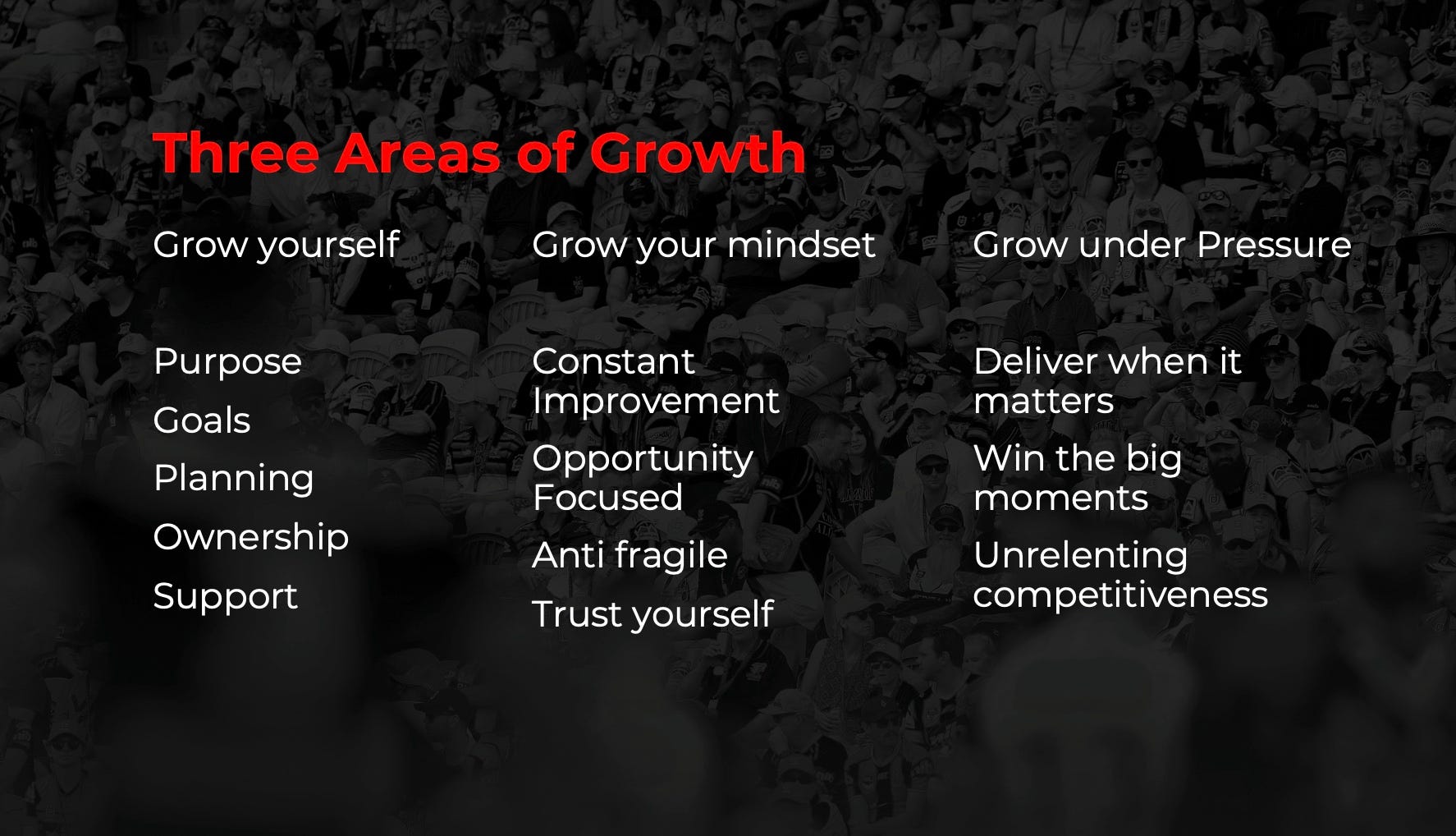
Phase One- Grow Yourself
What are we trying to develop?
Athletes who understands the relationship between wellbeing and performance and have practices in place to manage themselves on/off the field
Athletes who understand what it takes to be their best, they embrace those demands and have a system in place to meet those demands
Athletes who have a clear picture of who they want to become on and off the fied and have the knowledge, tools and support to achieve
Key Performance outcome
Consistency
Consistent performances are always the result of consistent habits. To developed this consistency athletes need to drive their mindset, energy and connection from within. They are prepared to take ownership in all reads of performance. This happens when they are clear on who they are, what they are trying to accomplish, know how they will get there and have the right level of support in place.
Phase two- Grow your mindset
What are we trying to develop?
Athletes possess a mindset that enables and empowers their aspirations. They understand the connection between their mind/body
Athletes are focused on growing their point of difference and have awareness of what makes them successful
Athletes who embraces the challenges of trying to fulfil their potential. They can work through challenges, overcome adversity and grow resilience
Key Performance Outcome
Belief
Building belief is hard if you only reflect on what you do poorly. Athletes who know what makes them good and continually focus on that, while simultaneously working on other areas of growth are much more likely to possess genuine belief. I like the 80/20 rule here. 80% of the time focusing on getter better at what I am already good at. This is fuelled by the reality that I get selected for what I do, not what I can’t do.
Phase Three- Grow under pressure
What are we trying to develop?
Athletes who are aware of the impact of pressure; they know their tendencies and know how to be at their best
Athletes who love big moments and walk towards them as they have the knowledge and tools in place to perform
Athletes who back themselves and their skillset, remaining instinctive and courageous when pressure arrives.
Key Performance Outcomes
Clinical
This is the final but most challenging part. Consistency leads to belief as the athletes have evidence they are doing all they can to be at their best. That confidence gives them the best opportunity to be clinical as they begin to trust their skill and back it to be good in big moments. Clinical athletes can access this skillset and execute that under pressure and fatigue. To grow this coaches need to be able to train this skillset by creating game like pressure in training that mimics what the athlete will face in games. This can be done easily on the physical level but creating the emotional and mental stress of a game is unrealistic when real outcomes are not present
Getting a framework in place is critical to the success of any program and is often sacrificed for the current need. We then lack the foundations to be mentally proficient.
Excellent insight and thanks for sharing. Great to see you back on SM, hope you’re doing well mate.